
Return To Blog Listings
Why Your AI Content Sounds Like a Robot (And How to Fix It)
Last week I was at a marketing conference called The Future of Search.
No surprise, most of the conversation was about how AI is changing marketing.
There were loads of expert opinions flying around, but one thing stuck out:
A lot of people just don’t believe good AI-generated content exists.
And honestly? I get it.
Because I’ve seen the same thing. And I think I know why.
What is “AI Slop”?
At the event, I heard a phrase I hadn’t come across before: AI Slop.
It refers to the low-quality, generic content that AI tools often churn out.
You’ve seen it. We all have.
If I went to your care home’s website right now (or ours, to be fair), I’m sure I’d find examples of it.
So why does this happen?
Simple. Bad prompts and no context.
When you tell AI to “write a blog post about our care home’s open day”, it doesn’t have enough to work with. And what comes back?
Slop. Bland, robotic, empty content.
The Fix: Give AI Some Guidelines
Just like a new team member, AI needs proper onboarding.
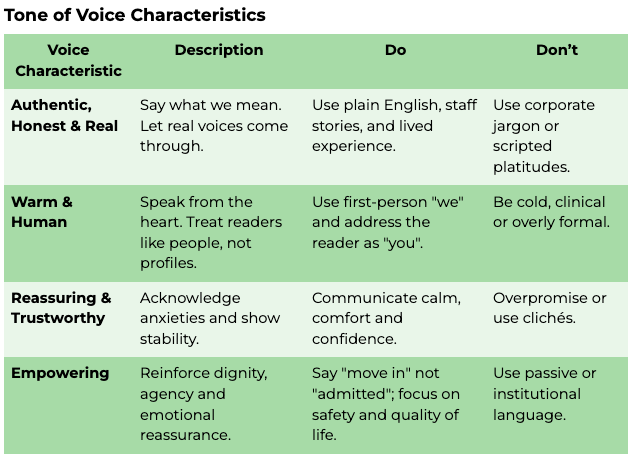
That’s where Tone of Voice Guidelines come in.
What are Tone of Voice Guidelines?
They’re the instruction manual for how your organisation communicates.
They teach both humans and AI how to sound like you — not like every other care provider out there.
Here’s what good guidelines cover:
- How you speak (warm? straight-talking? reassuring?)
- Words you use (like home manager, residents, families)
- Words you avoid (clinical jargon, clichés, empty promises)
- How you tell stories (real people, real emotion)
- Your tone in different situations (good news vs. sensitive updates)
Once you feed these into AI, the change is immediate. The content becomes more human, more grounded, more you.
How to Build Your Own Guidelines
When we start working with a care provider, Tone of Voice is one of the first things we tackle.
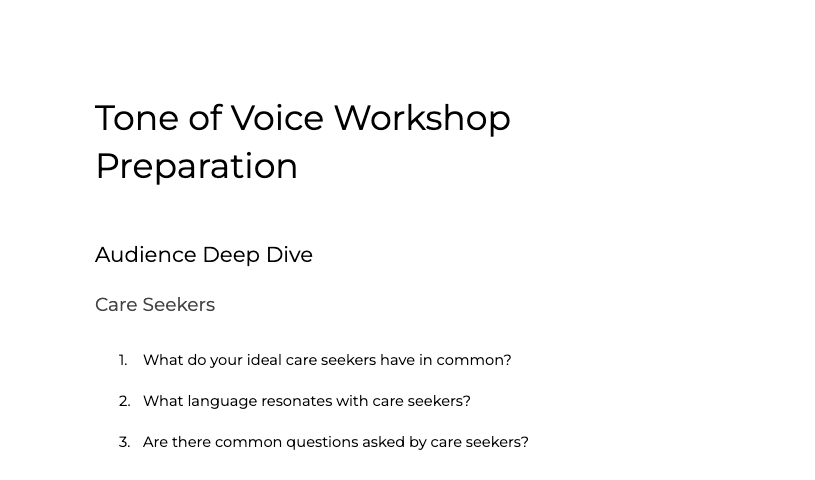
And the best way to do it? Run a Tone of Voice Workshop.
We bring together a small group (maybe a home manager, a carer, someone from the leadership team) and work through a shared document.
You can use our template here: https://docs.google.com/document/d/1BNsNmPXTyQMsxHZyNmfdb8j9L4JiCY_JYKOmzkcRqVc/edit?usp=sharing
Just work through the questions, add your answers, and upload it into whatever AI tool you use.
Ask the AI to treat your answers as the baseline for all future content.
You’ll be shocked at the difference.
Why This Matters for SEO Too
Beyond sounding more human, getting your tone right also helps with SEO.
Google’s ranking systems are getting smarter. They’re not just looking for keyword-stuffed content anymore, they’re looking for content that’s helpful, original, and written for people.
If your blog posts, landing pages, or service descriptions feel generic or robotic, it’s not just care seekers who’ll bounce, Google will too.
Handle With Care
AI is here to stay, and it's already saving time for a lot of care marketers. But without the right context, you’ll keep getting copy that sounds robotic and soulless.
Tone of Voice Guidelines are your shortcut to better, more human content.
Use them well.
